Can Golden Retrievers Swim? 5 Amazing Traits That Make Them Natural Water Dogs
If you’ve ever watched a Golden Retriever spot a lake from 50 yards away and immediately lose all sense of composure, you already know the answer. Yes — Golden Retrievers can absolutely swim, and most of them are borderline obsessed with it. But what makes them such exceptional water dogs? Is it just enthusiasm, or is something deeper going on?
As it turns out, it’s both. Golden Retrievers are purpose-built for the water, with a combination of physical traits, instinctual behaviors, and a genetic history that makes swimming feel completely natural to them. In this guide, we’re breaking down the five amazing traits that make Golden Retrievers outstanding swimmers, along with practical tips on water safety, health considerations, and the best aquatic activities for your dog.
Whether you’re a new Golden owner wondering if your pup will take to the water, or a seasoned handler looking to level up your aquatic adventures, you’ll find everything you need right here.
The History Behind Their Love of Water

Photo by Nathalia Crispim via Pexels
Golden Retrievers didn’t just stumble into their love of water — it was bred into them over generations. The breed traces its origins to 19th-century Scotland, where Dudley Marjoribanks (later Lord Tweedmouth) developed them specifically for hunting and retrieving waterfowl. Their development involved crossbreeding the now-extinct Yellow Water Spaniel with the Tweed Water Spaniel, along with contributions from Irish Setters and Bloodhounds.
The result was a dog engineered to leap into cold Scottish lochs, retrieve downed birds, and return them undamaged to the hunter — again and again, all day long. That heritage hasn’t faded. According to the American Kennel Club, Golden Retrievers are still classified as a sporting breed, and their natural retrieving instincts remain one of their most defining characteristics.
This background explains why so many Goldens leap into water without any encouragement at all — their instincts are simply doing what centuries of selective breeding intended. For a deeper look at everything that makes this breed special, check out our full Golden Retriever Dog Breed Guide.
5 Amazing Traits That Make Golden Retrievers Natural Swimmers

Trait 1: Webbed Toes for Powerful Propulsion
Take a close look at your Golden’s paws and you’ll notice a thin membrane of skin connecting their toes — this is webbing, and it functions much like a swimmer’s paddle. When your dog pushes their paw through the water, this webbing spreads to capture more surface area with each stroke, generating significantly more thrust than a non-webbed paw would.
This isn’t unique to Golden Retrievers — Labradors and Portuguese Water Dogs share this trait — but it’s a key reason why Goldens are so naturally efficient in the water. Less effort per stroke means they can swim longer distances without tiring as quickly, which is exactly what a waterfowl hunting dog needed to do for hours at a time in the Scottish Highlands.
Trait 2: A Water-Repellent Double Coat
Golden Retrievers have a distinctive double coat: a dense, water-repellent outer layer and a thick insulating undercoat beneath it. The outer layer is designed to shed water rather than absorb it, which means your dog doesn’t become waterlogged during a swim — a critical feature for a dog bred to spend hours in cold water retrieving game.
The undercoat provides thermal insulation, helping them maintain body temperature even in cooler water. This is why a Golden can splash around in a chilly lake and seem completely unbothered while you’re standing on the shore shivering in a jacket.
That said, this coat does require regular maintenance — especially after swimming. Wet fur that isn’t brushed out properly can mat quickly, and the dense undercoat can hold moisture against the skin. Check out our guide to the Best Brush for Golden Retrievers to keep their coat in top shape year-round — it’s especially useful if your Golden is a frequent swimmer.
Trait 3: An Otter-Like Tail That Acts as a Rudder
One of the more underappreciated features of a Golden Retriever’s anatomy is their thick, muscular tail. Often compared to an otter’s tail in breed descriptions, it serves as a natural rudder in the water — helping them steer, stabilize, and change direction with surprising precision.
Watch a Golden swimming and you’ll notice their tail working constantly just below the surface, making small adjustments that keep them on course. This is part of why Golden Retrievers look so graceful in the water compared to some other breeds. Their tail isn’t just wagging for joy (though there’s plenty of that too) — it’s actively doing hydrodynamic work.
Trait 4: A Muscular, Powerful Build
Golden Retrievers have a well-balanced, muscular body with strong hindquarters that generate the power behind each swimming stroke. Their build hits a sweet spot between strength and agility — they’re not so heavy that they struggle to stay buoyant, and not so slight that they lack the muscle to move efficiently through water.
According to the AKC breed standard, males typically weigh between 65–75 pounds and females between 55–65 pounds — a size range that’s well-suited to sustained aquatic activity. Their broad chest also contributes to buoyancy, giving them a naturally high riding position in the water that makes swimming look almost effortless.
Trait 5: Instinctual Retrieving Drive and Playful Enthusiasm
Perhaps the most powerful swimming trait a Golden Retriever has isn’t physical at all — it’s behavioral. Their retrieving instinct is deeply hardwired, and water simply amplifies it. Toss a ball into a lake and most Goldens won’t hesitate for a second. That drive to fetch, combined with their naturally playful and social personalities, makes water activities feel intrinsically rewarding to them.
This enthusiasm also means that Golden Retrievers are generally easier to introduce to swimming than more water-averse breeds. Their positive, eager-to-please temperament — the same quality that makes them such wonderful family companions (read more in our post on Why Golden Retrievers Are So Friendly) — translates directly into a willingness to engage with new aquatic experiences.
How Do Golden Retrievers Compare to Other Swimming Breeds?

Golden Retrievers are excellent swimmers, but how do they stack up against other water-loving breeds? Here’s a quick comparison to give you a clearer picture:
| Breed | Webbed Toes | Water-Repellent Coat | Natural Drive | Temperament in Water | Best For |
|---|---|---|---|---|---|
| Golden Retriever | Yes | Yes (dense double coat) | Very High | Enthusiastic, social | Recreational swimming, dock diving, therapy |
| Labrador Retriever | Yes | Yes (dense, oily coat) | Very High | Energetic, driven | Competitive water sports, hunting |
| Portuguese Water Dog | Yes (fully webbed) | Yes (curly or wavy) | High | Focused, athletic | Competitive dock sports, agility |
| Irish Water Spaniel | Yes | Yes (curly, water-shedding) | High | Independent, energetic | Waterfowl hunting |
| Standard Poodle | Yes | Moderate | Moderate–High | Intelligent, versatile | Recreational swimming, dog sports |
| Bulldog (French/English) | No | No | Low | Struggles significantly | Not recommended without a life jacket |
Golden Retrievers consistently rank among the top swimming breeds thanks to all five traits working together in harmony. It’s not just one thing — it’s the whole package that makes them so naturally suited to life in and around water.
How to Safely Introduce Your Golden Retriever to Swimming

Even though most Goldens take to water naturally, it’s still important to introduce swimming gradually and safely — especially with puppies or dogs that haven’t had much water exposure before.
Here’s a step-by-step approach that works well for most Golden Retrievers:
- Start shallow. Begin in calm, shallow water — a gentle lake shore or a shallow river bank works perfectly. Let your dog wade in at their own pace without any pressure to go deeper.
- Use positive reinforcement. Bring their favorite toy or high-value treats and make the experience fun and rewarding. Praise enthusiastically when they step into the water. For great options, see our roundup of the Best Treats for Golden Retrievers.
- Go in with them. If you’re comfortable in the water, getting in alongside your dog can build their confidence dramatically. Dogs are social animals and your calm, reassuring presence makes a real difference.
- Use a fetch toy to encourage deeper movement. Once they’re comfortable wading, toss a toy just beyond their standing depth to encourage them to paddle. Most Goldens will go for it without hesitation.
- Consider a life jacket for early sessions. A properly fitted canine life jacket adds buoyancy and gives you a handle to assist your dog if needed — especially useful in open water or for younger dogs still building confidence.
- Keep initial sessions short. Even eager swimmers can overdo it. Aim for 10–15 minutes to start and gradually build up as your dog’s stamina and confidence grow.
- Always supervise. Never leave a dog unsupervised near water, regardless of their swimming ability.
Dog Life Jacket for Large Breeds
A properly fitted life jacket adds buoyancy and a grab handle — essential for open water adventures, boat trips, or nervous first-time swimmers.
Health Considerations for Swimming Golden Retrievers

Photo by MAURO FOSSATI via Pexels
Water activities offer excellent low-impact exercise for Golden Retrievers — swimming is far easier on the joints than running, which makes it particularly valuable for dogs with mobility concerns. That said, there are a few important health considerations every Golden owner should be aware of before heading to the water.
Hip Dysplasia
Golden Retrievers have a well-documented genetic predisposition to hip dysplasia, a condition where the hip joint doesn’t develop properly and can lead to arthritis and chronic pain. According to the Orthopedic Foundation for Animals (OFA), Golden Retrievers rank among the breeds most commonly screened for this condition.
While swimming is generally gentler on dysplastic hips than high-impact exercise, you should still monitor your dog carefully for signs of discomfort — limping, reluctance to enter the water, or difficulty getting up afterward. Always consult your veterinarian before starting a swimming program if your dog has been diagnosed with hip dysplasia.
Ear Infections
Golden Retrievers have floppy ears that trap moisture after swimming, creating the warm, damp environment that bacteria and yeast thrive in. According to VCA Animal Hospitals, ear infections (otitis externa) are among the most common health issues in dogs, and breeds with pendulous ears are particularly susceptible.
After every swim, gently dry your dog’s ears with a clean towel and consider using a vet-approved ear-drying solution. If you notice your dog shaking their head frequently, scratching at their ears, or if there’s an unusual odor, schedule a vet visit promptly — ear infections caught early are much easier and less costly to treat.
Skin Irritation from Chlorine and Salt Water
Prolonged exposure to chlorinated pool water or salt water can strip natural oils from your dog’s coat and irritate their skin. Always rinse your Golden thoroughly with fresh water after swimming — paying extra attention to between the toes and around the collar area. Using a gentle, moisturizing dog shampoo formulated for frequent bathing can help maintain coat and skin health. Our guide to the Best Shampoo for Golden Retrievers covers several excellent options specifically suited to water-active dogs.
Water Intoxication (Hyponatremia)
This one surprises many owners: dogs can actually ingest too much water while swimming, leading to a dangerous drop in sodium levels known as hyponatremia. Water intoxication is rare but real, particularly in enthusiastic, ball-obsessed dogs who spend extended periods in the water gulping as they retrieve.
Senior Dogs and Swimming
Older Golden Retrievers may still adore the water but have reduced stamina and joint comfort. Swimming can actually be therapeutic for senior dogs — the buoyancy of water takes pressure off arthritic joints while still delivering a full-body cardiovascular workout. Keep sessions shorter for older dogs, watch for signs of fatigue, and consider using a life jacket for seniors whose muscle mass has declined. For more on supporting your aging Golden, see our guide on Golden Retriever Aging: 5 Unique Traits of Senior Dogs.
- Rinse thoroughly with fresh water
- Dry ears carefully with a clean towel
- Check between toes for debris, burrs, or irritation
- Brush coat once fully dry to prevent matting
- Offer fresh drinking water to discourage gulping from natural sources
- Watch for signs of fatigue or discomfort in the hours after swimming
Floating Fetch Toy for Dogs
A brightly colored, buoyant fetch toy is perfect for building water confidence and satisfying your Golden’s retrieving instinct during swim sessions.
The Best Aquatic Activities for Golden Retrievers
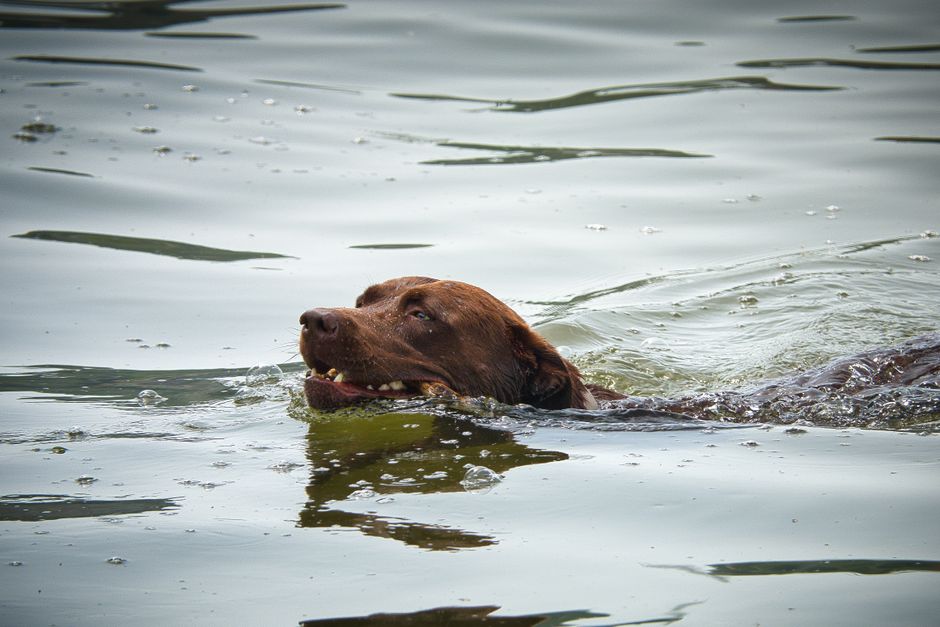
Photo by Joerg Hartmann via Pexels
Once your Golden is a confident swimmer, a whole world of water-based activities opens up. Here are some of the best options to explore:
Dock Diving
Dock diving is exactly what it sounds like — dogs leap off a dock to retrieve a toy thrown into the water, with competition judged on distance or height. Golden Retrievers excel at this sport, combining their powerful build with their natural retrieving drive. Organizations like DockDogs hold sanctioned events across the country and welcome dogs of all experience levels, making it a fantastic activity for first-timers and seasoned competitors alike.
Water Retrieval Trials
These field trials test a dog’s ability to retrieve from water in conditions that simulate real hunting scenarios. Golden Retrievers have centuries of instinct to draw on and consistently perform at a high level. The AKC recognizes hunt tests specifically for retrievers, and many Golden owners find these events deeply rewarding — they tap into exactly what the breed was born to do.
Recreational Lake and River Swimming
Sometimes the best activity is simply finding a clean lake, throwing a bumper or ball, and letting your Golden do what they love. This form of exercise is mentally stimulating, physically demanding, and deeply satisfying for most Goldens. It’s also a wonderful bonding activity for the whole family and requires no special equipment beyond a good fetch toy and fresh water for drinking. If you’re looking to stock up on toys your Golden will love in and out of the water, our roundup of the Best Toys for Golden Retrievers is a great place to start.
Canine Hydrotherapy
Hydrotherapy — therapeutic swimming in a controlled pool or on an underwater treadmill — is increasingly used for dogs recovering from surgery or managing chronic conditions like arthritis. According to research published on PubMed examining aquatic therapy in veterinary rehabilitation, aquatic exercise can significantly improve limb function and reduce pain in dogs with orthopedic conditions. Given Golden Retrievers’ predisposition to hip and joint issues, this is a particularly relevant option as they age.
Therapy Work Involving Water
Some Golden Retrievers are trained to assist in aquatic therapy programs for people with disabilities or injuries. Their calm temperament, natural affinity for water, and deeply people-loving nature make them ideally suited for this meaningful work. It’s a beautiful example of how a breed’s natural traits can be channeled into genuine service to others.
Quick Tips for Safe Swimming Adventures

Photo by JacLou- DL via Pexels
- Always check water quality before letting your dog swim — avoid areas with visible algae blooms, which can contain cyanobacteria toxic to dogs
- Keep your dog on leash near fast-moving water or unfamiliar shorelines until you’ve assessed the conditions
- Know where the safe exit points are before letting your dog enter any body of water
- Avoid swimming in extreme heat — dogs can overheat even in water if ambient temperatures are very high
- Make sure your dog is current on vaccines, particularly leptospirosis, which can be contracted from natural water sources — consult your vet about this vaccine
- Provide shade and fresh drinking water at all outdoor swim sessions
- Introduce puppies to swimming only after their vaccine schedule is complete — typically around 16 weeks of age
- Watch for signs of fatigue: struggling to stay afloat, slower paddling, excessive panting, or seeking the shore are all cues to end the session
Frequently Asked Questions
Can all Golden Retrievers swim, or are some afraid of water?
Most Golden Retrievers take to water naturally due to their breeding history, but individual personalities do vary. Some Goldens — particularly those who had limited water exposure as puppies — may be hesitant at first. The good news is that with patient, positive introductions starting in shallow, calm water with lots of praise and high-value treats, even water-shy Goldens can learn to enjoy swimming. It’s quite rare for a Golden to never warm up to water at all, though it does happen occasionally with certain individuals.
At what age can Golden Retriever puppies start swimming?
Most veterinarians recommend waiting until puppies have completed their full vaccination schedule — typically around 16 weeks — before exposing them to natural bodies of water, to reduce the risk of waterborne illnesses like leptospirosis. After that, gentle water introductions can begin. Puppies tire quickly, so keep early sessions very short (5–10 minutes) and always supervise closely. A shallow, calm environment like a kiddie pool makes an excellent starting point before moving to lakes or rivers.
How long can a Golden Retriever safely swim in one session?
There’s no single universal limit, but most healthy adult Golden Retrievers can swim comfortably for 20–30 minutes before meaningful fatigue sets in. Factors like age, overall fitness level, water temperature, and current strength all affect stamina significantly. Always watch for signs of tiredness — struggling to stay afloat, slower paddling, excessive panting, or actively seeking the shore. Take regular breaks every 10–15 minutes even for experienced swimmers, and always end the session before your dog reaches exhaustion rather than after.
Do Golden Retrievers need a life jacket to swim?
Not in most recreational situations — healthy adult Goldens are naturally buoyant and capable swimmers who generally don’t require a life jacket in calm, familiar water. However, a life jacket is strongly recommended for open water, boating trips, fast-moving water, unfamiliar environments, senior dogs with reduced stamina, dogs with joint conditions, and young puppies just learning to swim. A well-fitted life jacket also gives you a handle to grab if your dog needs assistance, which can be genuinely invaluable in an emergency.
Is swimming good exercise for Golden Retrievers with hip dysplasia?
Swimming is often one of the best forms of exercise available for Golden Retrievers with hip dysplasia because the buoyancy of water significantly reduces the load on joints while still providing a full-body cardiovascular workout. Many veterinary rehabilitation specialists prescribe hydrotherapy as part of a management plan for dogs with hip dysplasia or arthritis. That said, always get clearance from your veterinarian before starting any exercise program for a dog with a diagnosed orthopedic condition, and watch carefully for signs of pain or discomfort during and after swimming sessions.

You Might Also Like

Golden Retriever Socialization: 5 Essential Tips to Raise a Calm, Confident Dog
Discover 5 expert-backed tips to socialize your Golden Retriever and prevent over-excitement, anxiety, and behavioral issues. Practical advice for every…

Golden Retriever Mouthing: 5 Proven Tips to Redirect Playful Behavior
Is your Golden Retriever mouthing everything in sight? Discover 5 vet-backed tips to redirect this normal behavior and strengthen your…

Best Nail Clippers for Golden Retrievers: Top 5 Picks & Expert Grooming Guide
Discover the best nail clippers for Golden Retrievers in 2025. Expert picks, buying tips, and a step-by-step trimming guide for…